
 on Google


The lift is used every day by almost every resident and is, at the same time, one of the items that weighs most on the condominium budget and demands most in terms of safety. In this guide to lift maintenance in condominiums in Portugal, we explain what the law requires, how periodic inspections work, who pays, what to put in the contract, what to do in a breakdown and the role of the administrator and the owners.
In short
- ✓The condominium must have a maintenance contract with an EMIE (lift maintenance company) recognised by DGEG, the Directorate-General for Energy and Geology (Decree-Law 320/2002).
- ✓The EMIE is jointly liable with the owner for accidents caused by poor maintenance.
- ✓Periodic inspections take place every 2, 4 or 6 years, depending on the type of building.
- ✓Only owners whose units can be served by the lift pay for it (art. 1424(4) of the Civil Code).
- ✓The administrator contracts the maintenance, keeps the records and handles the inspections.
Maintenance is mandatory
Decree-Law 320/2002 requires the owner of a lift to contract its maintenance to a lift installation maintenance company, the EMIE. In a building under horizontal property, the owner is the condominium, represented by the administrator. DGEG explains the rules and stresses the company’s responsibility:
«A EMIE assume a responsabilidade, criminal e civil, pelos acidentes causados pela deficiente manutenção das instalações ou pelo incumprimento das normas aplicáveis, sendo a responsabilidade assumida solidariamente com o proprietário.» — DGEG, Maintenance and inspection of lifts
In plain English: the EMIE takes on criminal and civil responsibility for accidents caused by poor maintenance of the installations or by failure to comply with the applicable rules, and that responsibility is shared jointly with the owner.
The consolidated text of the decree-law is available in the Diário da República. Before signing, ask the company for proof of its registration as an EMIE.
Periodic inspections
| Type of building | Inspection interval |
|---|---|
| Commercial or services, open to the public | 2 years |
| Mixed (housing and shops or services) | 4 years |
| Residential with more than 32 dwellings or more than 8 floors | 4 years |
| Other residential buildings | 6 years |

The inspection is requested from the city council or a recognised inspection body. If serious faults are found, the lift can be sealed until they are corrected. A good contract provides for the EMIE to prepare the equipment for inspection and correct the deficiencies found.
Who pays for the lift
The lift is a common part, and expenses are as a rule split according to the permillage (art. 1424(1) of the Civil Code). For lifts, the law has a special rule:
«4. Nas despesas dos ascensores só participam os condóminos cujas fracções por eles possam ser servidas.» — Civil Code, article 1424(4)
In plain English: in the expenses of lifts, only the owners whose units can be served by them take part.
A street-level shop with no access to the lift, for example, may be exempt. The title deed or the regulations can set out the split in more detail. We explain these rules in our guide to lifts in condominiums and the law and in our article on how the monthly condominium fee is calculated.
The administrator's role
The administrator is responsible for carrying out acts to preserve the common parts and for regulating the provision of services of common interest (art. 1436(1) of the Civil Code). For the lift, this means:
- Keeping a contract with a registered EMIE, with an appropriate scope.
- Keeping the logbook of visits and interventions.
- Requesting periodic inspections on time.
- Making sure faults are corrected and the lift is not used if it has been sealed.
- Presenting modernisation proposals to the general meeting, with at least three quotes in the case of extraordinary maintenance or innovation (art. 1436(2)).
What to assess in a maintenance contract
- Scope: a basic contract, with visits and adjustments only, or a full one, including parts replacement.
- Visits: frequency and recording of interventions.
- Rescue: 24-hour availability and maximum arrival time when people are trapped.
- Exclusions: parts not covered and the price of extra labour.
- Inspections: preparation and correction of faults.
- Term and termination: contract length and notice period to end it.
Compare proposals with the same scope. A cheap contract with many exclusions can turn out expensive at the first serious breakdown.
Planning the costs
The annual cost of the lift combines the monthly contract fee, electricity, repairs outside the contract, the inspection fee and, from time to time, larger works. Include all these items in the annual budget approved by the general meeting and set aside a margin for the unexpected. Ask the EMIE every year for a list of parts with foreseeable wear and an estimate of the work needed in the coming years. That way the general meeting can decide in good time, top up the reserve fund and avoid unexpected extra contributions. In a building with several lifts, compare the costs of each: a large difference may point to equipment near the end of its life.
Breakdowns and trapped passengers
If someone is trapped, use the alarm button in the car and call the EMIE emergency number displayed in the lift. Do not try to open the doors or get people out yourself. If anyone is injured or unwell, call 112. Then inform the management, which should ask the EMIE for the breakdown report. If breakdowns recur, the management should require the company to analyse the cause and present a corrective plan, and consider, with the general meeting, reviewing or changing the contract.
What owners should know
- Respect the maximum load shown in the car.
- Protect the car during removals and works and tell the management beforehand.
- Do not leave young children alone in the lift.
- Report noises, jolts or doors that do not close properly.
- Take part in general meetings where modernisation is discussed.
Modernise or replace
Old lifts may need works to meet current safety standards, such as car doors, accurate levelling or two-way communication. Modernisation is extraordinary maintenance or an innovation, approved by the general meeting. The reserve fund can help pay for it, and our guide to innovation works explains the majorities.
How Condoroo helps
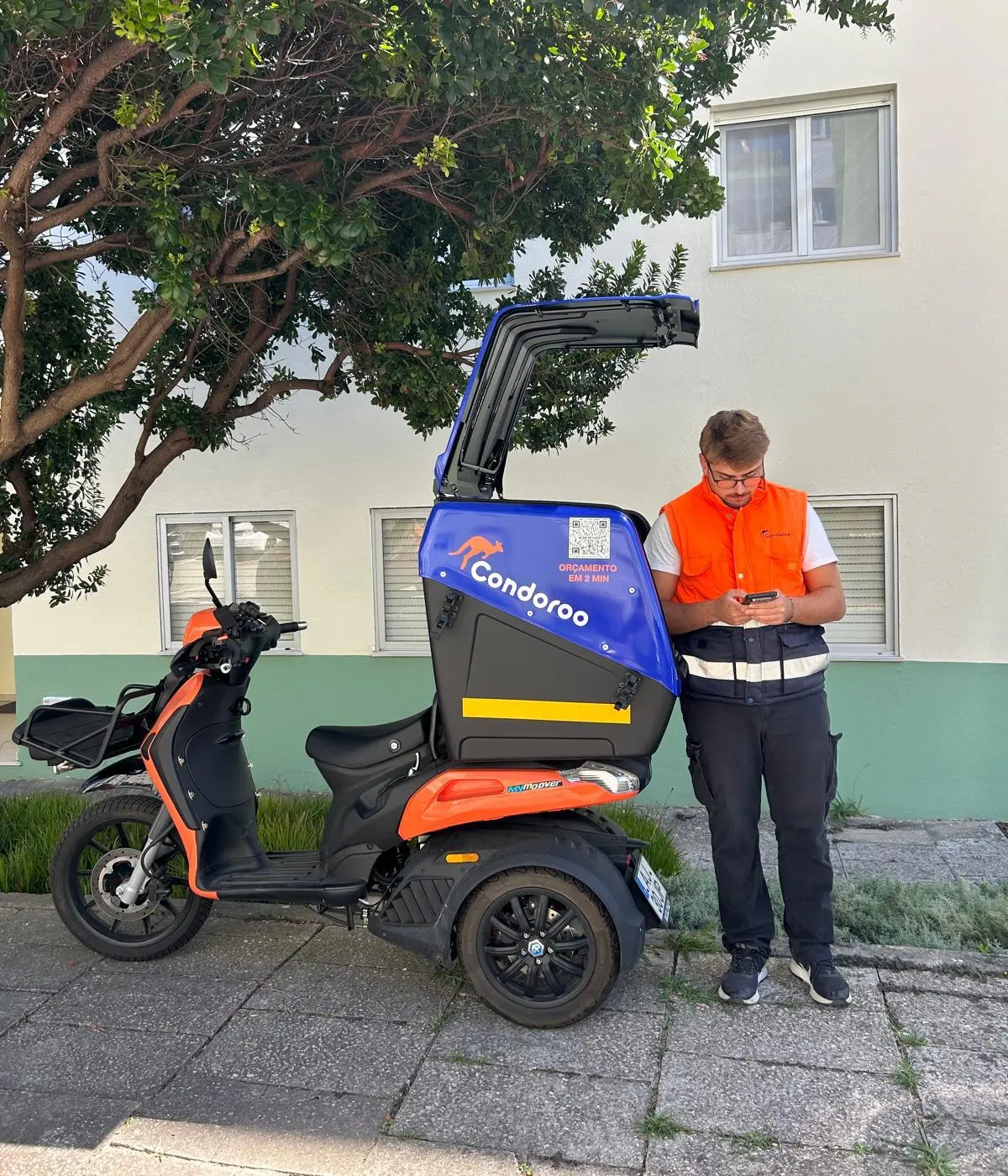
Condoroo manages more than 600 condominiums, including buildings with more than 300 units, with a team of more than 20 professionals. We negotiate maintenance contracts, follow up inspections and deal with breakdowns. Management plans start at €6.50 per unit per month.
Lifts in condominiums: frequently asked questions
Is lift maintenance mandatory?
Yes. Decree-Law 320/2002 requires the owner, which in a building is the condominium, to have a maintenance contract with an EMIE.
How often is the lift inspected?
Every 2, 4 or 6 years, depending on the type of building. In residential buildings with up to 32 dwellings and 8 floors, the interval is 6 years.
Does the ground floor pay for the lift?
Only owners whose units can be served by the lift share in its expenses (art. 1424(4) of the Civil Code).
Who is liable for an accident in the lift?
The EMIE is criminally and civilly liable for accidents caused by poor maintenance, jointly with the owner, according to DGEG.
What happens if the lift is sealed at inspection?
It cannot be used until the faults are corrected and the situation is regularised.
How many quotes are needed to modernise the lift?
At least three, from different sources, for extraordinary maintenance or innovations (art. 1436(2) of the Civil Code).
This article is for information only. Legislation and websites checked on 26 October 2026.