
 on Google


Elevators in condominiums are among the most regulated equipment in a building. The law requires a maintenance contract, sets how often inspections take place and provides for fines for anyone who does not comply. It also defines who pays the lift’s expenses and what majority is needed to install a new one. In this guide, we summarise what Decree-Law 320/2002 and the Civil Code say, based on the guidance of DGEG, the Directorate-General for Energy and Geology. For the practical side of maintenance and choosing a company, see our article on maintenance of elevators in condominiums.
In short
- ✓The lift must have a maintenance contract with a company recognised by DGEG.
- ✓Periodic inspections take place every 2, 4 or 6 years, depending on the type of building.
- ✓Operating without a maintenance contract is an offence punishable by a fine of €1,000 to €5,000 (art. 13 of Decree-Law 320/2002).
- ✓Only owners whose units can be served by the lift pay its expenses (art. 1424(4) of the Civil Code).
- ✓Installing a lift in a building with at least eight units requires a majority of owners representing the majority of the building’s value (art. 1425).
Which law applies to elevators
The reference law is Decree-Law 320/2002 of 28 December, which regulates the maintenance and inspection of lifts, goods lifts, escalators and moving walkways after they enter service. According to DGEG, the decree-law has been partly repealed as regards regulated professions, but it keeps the rules on maintenance, inspection, supervision and fines. DGEG also says that a new legal framework is expected to replace this decree-law, so it is worth following any news.
Maintenance: mandatory and with shared responsibility
Every lift in service must have a maintenance contract with a lift maintenance company (EMIE, empresa de manutenção de instalações de elevação) recognised by DGEG. The contract must meet the minimum services and maintenance plans set out in the decree-law. DGEG explains clearly why this choice matters:
«A EMIE assume a responsabilidade, criminal e civil, pelos acidentes causados pela deficiente manutenção das instalações ou pelo incumprimento das normas aplicáveis, sendo a responsabilidade assumida solidariamente com o proprietário.» — DGEG, Maintenance and inspection of lifts
In plain English: the maintenance company takes on criminal and civil liability for accidents caused by poor maintenance or by failing to follow the applicable rules, and it shares that liability jointly with the owner.
In a condominium, the «owner» of the common parts is all the owners together, represented by the administrator. That is why the administrator must confirm that the contract is active, that the company is recognised and that the maintenance records are kept in the building’s files. DGEG does not intervene in contractual disputes between the condominium and the company; those conflicts are settled in the courts.
Periodic inspections: how often
Inspections are the responsibility of the municipal councils, which can delegate them to inspection bodies recognised by DGEG. Lifts are inspected at the following intervals:
| Type of building | Inspection interval |
|---|---|
| Commercial or services, open to the public | 2 years |
| Mixed (housing and shops or services) | 4 years |
| Residential with more than 32 dwellings or more than 8 floors | 4 years |
| Other residential buildings | 6 years |
The inspection has a fee, set by the competent municipal bodies. A technician from the maintenance company must be present at the inspection. If the lift is not safe, the municipal council can seal it until it is repaired.

Fines provided for by law
Article 13 of Decree-Law 320/2002 provides for, among others, the following offences:
- Maintenance technician absent from the inspection: €250 to €1,000.
- Failing to request the inspection within the legal deadlines: €250 to €5,000.
- Lift operating without a maintenance contract: €1,000 to €5,000.
For an individual, the maximum fine is €3,750. Negligence is also punishable. The fines in these three cases are imposed by the mayor.
Who pays the lift's expenses
The costs of maintaining and using the common parts are paid by the owners in proportion to the value of their units, unless otherwise provided (art. 1424(1)). For lifts, there is a special rule:
«4. Nas despesas dos ascensores só participam os condóminos cujas fracções por eles possam ser servidas.» — Civil Code, article 1424(4)
In plain English: only the owners whose units can be served by the lifts share in the lifts’ expenses.
In practice, a shop on the ground floor with no access to the lift may be exempt. The owner on the first floor who prefers the stairs still pays, because their unit can be served by the lift. Find out more in our guides to how the monthly condominium fee is calculated and to permillage.
Installing or replacing a lift
Installing a lift in a building that does not have one is an innovation. If the building has at least eight independent units, the law requires approval by a majority of owners representing the majority of the building’s total value (art. 1425(2)). In other cases, the general rule for innovations applies: a majority of owners representing two thirds of the total value.
According to DGEG, replacing an existing lift must meet the design, manufacture, installation and testing requirements of the European lift rules. For extraordinary maintenance works or innovations, the administrator must present at least three quotes (art. 1436(2)). See also how to decide on innovation works in the condominium.
In the event of a breakdown or accident
- Switch off the lift and put a notice on the landing doors.
- Contact the maintenance company immediately.
- If people are trapped, call the company and, in an emergency, 112.
- Report any accidents to the municipal council, as the decree-law requires.
- Record the incident and the repair in the condominium’s files.
Administrator's checklist
- ✓An active maintenance contract with a company recognised by DGEG.
- ✓The date of the last and the next inspection, recorded in the building’s calendar.
- ✓The inspection certificate displayed or filed.
- ✓Building insurance with civil liability cover.
- ✓An annual budget with an amount for the lift, split only among the units it serves.
- ✓Maintenance reports filed.
How Condoroo helps
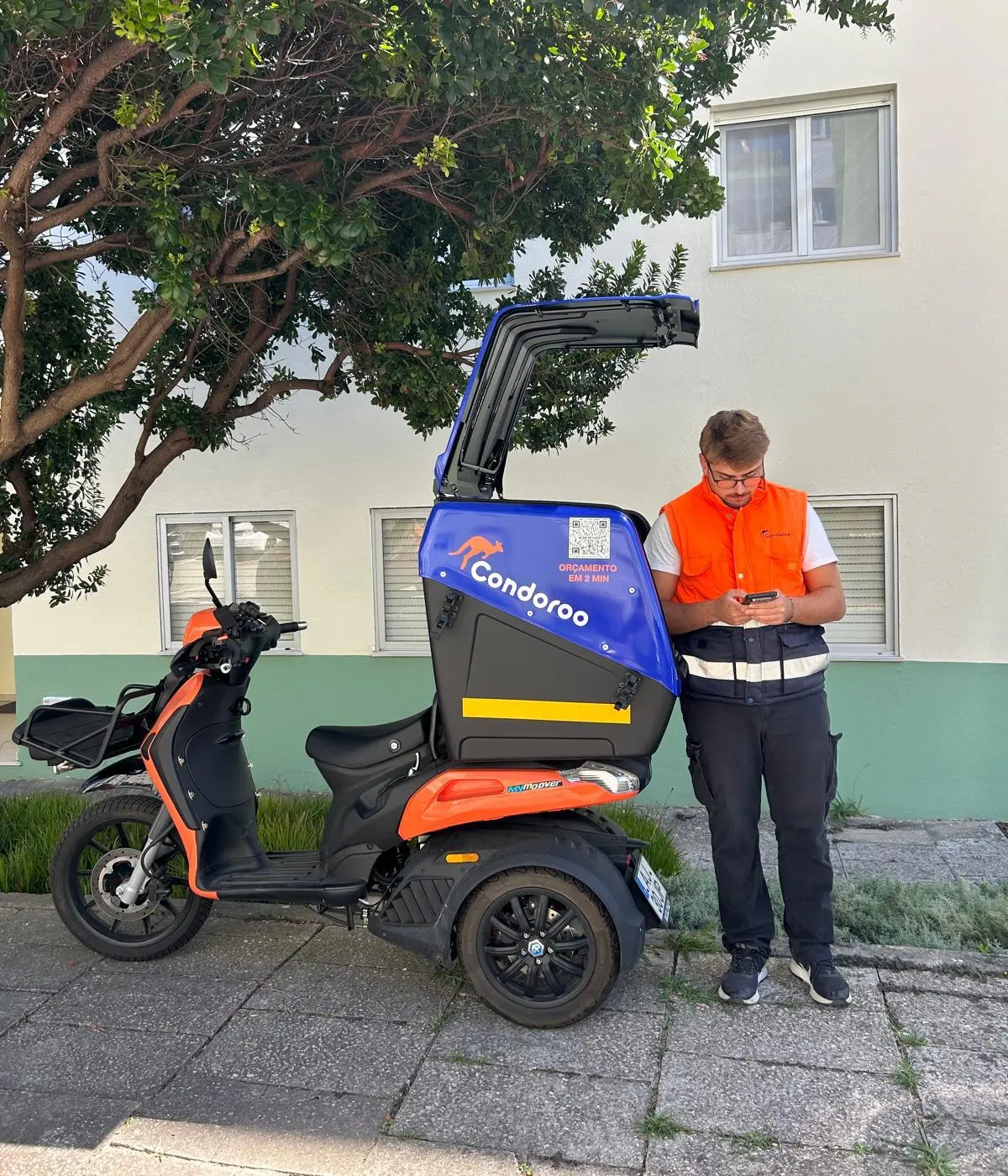
Condoroo manages more than 600 condominiums, with a team of more than 20 professionals. We keep track of inspection dates, follow up maintenance contracts and file every report, and our inspection visits, more than 35 a day, include the common equipment.
Elevators in condominiums: frequently asked questions
Is a lift maintenance contract mandatory?
Yes. Every lift in service must have a contract with a maintenance company recognised by DGEG. Operating without one is punishable by a fine of €1,000 to €5,000.
How often is the lift in a residential building inspected?
Every 4 years in buildings with more than 32 dwellings or more than 8 floors, and every 6 years in the others. In mixed buildings, every 4 years.
Who pays for the lift in a condominium?
The owners whose units can be served by the lift, in proportion to the value of the units, unless the title deed or the regulations set a different rule.
Does the owner of a ground-floor shop pay for the lift?
If the shop cannot be served by the lift, it does not share in those expenses (art. 1424(4) of the Civil Code).
What majority is needed to install a lift?
In buildings with at least eight units, a majority of owners representing the majority of the building’s total value. In the others, the general rule for innovations: two thirds of the total value.
Who inspects lifts?
The municipal councils, directly or through inspection bodies recognised by DGEG.
This article is for information only and does not replace specialist technical or legal advice. Legislation checked on 26 October 2026.