
 on Google


IMI on vacant property: losing your AL (Alojamento Local, short-term rental) registration does not make your home «devoluta» (officially vacant) overnight. But the unit loses the AL exception and, after a year standing empty, the câmara (town hall) can declare it vacant. In Lisbon, where the whole city is a zone of urban pressure, the IMI (municipal property tax) rate then becomes ten times the normal rate, rises 20% a year and can reach 20 times. Letting the property avoids this.
In short
- ✓Losing your AL registration does not make the home vacant overnight, but it ends the exception that protected the unit.
- ✓A unit left empty for a year can be declared vacant; the câmara uses utility consumption (up to 7 m³ of water and 35 kWh of electricity a year) and may inspect.
- ✓IMI on vacant property in Lisbon: because the whole city is a zone of urban pressure, the IMI rate becomes 10 times the normal rate, rises 20% a year and is capped at 20 times.
- ✓Example with a tax value (VPT) of €150,000: €450 of normal IMI, €4,500 in the first year as vacant and up to €9,000 at the cap.
- ✓Before any decision there is a prior hearing, usually with at least 10 working days to reply with evidence.
- ✓Letting the home as a residence avoids the surcharge and may give access to Lisbon’s IMI reduction for let homes.
IMI on vacant property: what is at stake in Lisbon
In early 2026, Lisbon City Council cancelled 6,765 Alojamento Local (AL) registrations, around 40% of the total, because the compulsory third-party liability insurance was missing. The figure appears in the Radiografia do Alojamento Local em Lisboa 2023-2026, released on 7 October, and was reported by Observador/Lusa and, in February, by idealista.
Lisbon now has 11,704 AL units, 37% fewer than in 2025, but the homes have not appeared on the market. In a sample of buildings with cancelled AL in Santa Maria Maior, only about 11% had been advertised for sale or rent on idealista in the past year; in Ajuda, between 6% and 8%. The authors accept that a home with no advert may be in personal use or let through other channels.
On 5 October, the residents’ association behind the study sent the mayor the list of addresses and asked the council to cross-check it against water, electricity and gas consumption, in order to declare homes empty for more than a year as vacant. The Boletim de Alojamento Local explained the request on 12 October. At the time of writing, the council has not announced any decision. But the law it relies on exists and applies to every owner.
Why does a cancelled AL lose its protection?
The definition of a vacant property is in Decree-Law 159/2006. Article 2 says that a unit left unoccupied for one year is classed as vacant. Article 3 lists the exceptions, and point g) includes a unit «registered as an alojamento local establishment».
With an active registration, the home was protected, even without guests. Once the registration is cancelled, the unit is assessed like any other: if it is occupied, there is no problem; if it has been closed for a year, it can be declared vacant.
Important: there is one point the law does not settle expressly: whether the year of vacancy only counts from the cancellation. According to the study, the cancellations were completed in early February 2026. On the reading most favourable to owners, those homes would only complete a year closed without protection in February 2027. Do not count on it: the request made to the council asks precisely whether it can act in time for the IMI for 2026.
How much extra IMI does a vacant home pay? Example with a VPT of €150,000
The IMI rate for urban property ranges from 0.3% to 0.45%, under article 112 of the IMI Code. Lisbon set 0.3%, the minimum rate, for the 2025 IMI charged in 2026.
Outside zones of urban pressure, a vacant home pays triple (article 112(3)). Lisbon is different: in December 2025, the municipal assembly extended for 12 months the classification of the whole municipality as a zone of urban pressure, as set out in Notice 3256/2026/2. Article 112-B then applies: the rate is «raised tenfold», increased «in each subsequent year by a further 20%», capped at 20 times the normal rate.
IMI on vacant property in figures. Example with a tax value (valor patrimonial tributário, VPT) of €150,000 and a rate of 0.3%:
| Situation | Rate applied | Annual IMI |
|---|---|---|
| Home occupied or let | 0.3% | €450 |
| Vacant, outside a zone of urban pressure (triple) | 0.9% | €1,350 |
| Vacant in Lisbon, 1st year (×10) | 3% | €4,500 |
| Vacant in Lisbon, 2nd year (+20%) | 3.6% | €5,400 |
| Article 112-B cap (×20) | 6% | €9,000 |
Important: the law does not say whether the 20% each year applies to the previous year’s rate or to the initial tenfold rate. Depending on the reading, the €9,000 cap is reached in the fifth or sixth year. Article 112-B(3) also lets the municipal assembly raise that cap by 50% for homes that are neither let nor a permanent own residence. Check your VPT on the caderneta predial (property tax record).
When does a closed-up home become vacant?
Three things are needed: a year without occupation, no exception under article 3, and a procedure completed by the câmara and reported to the Tax Authority (AT). None of this is automatic.
The deadline that matters is the reporting deadline. Article 112(16) of the IMI Code requires municipalities to report vacant properties to the AT within the same deadline as the tax rates, that is, by 31 December, and to publish them on their website. Going by Lisbon’s practice of voting the rate for the current year in December, a report by 31 December 2026 would affect the IMI for 2026, paid in 2027.
How does the câmara know the home is empty?
Article 2 of Decree-Law 159/2006 lists the signs of vacancy:
- no water, gas, electricity or telecoms contracts in force;
- no billing for those services;
- low consumption over the year, at the same time up to 7 m³ of water and 35 kWh of electricity;
- a municipal inspection confirming that the home is unoccupied.
Under article 5, telecoms, water, gas and electricity companies must send municipalities, by 1 October each year, the list of units with no contracts, no consumption or low consumption. Note: consumption above those levels does not prevent classification, because the câmara can always carry out an inspection.
How do you challenge it at the prior hearing?
Before deciding, the câmara sends the owner, at their tax address, the draft declaration of vacancy (article 4). A prior hearing (audição prévia) follows under the Code of Administrative Procedure, with a deadline that, as a rule, is not less than 10 working days. This is the moment to file evidence. After the decision, it can still be challenged in the administrative courts.
How to reply well:
- Check your tax address (domicílio fiscal). If it is an old address, you can miss the deadline without noticing.
- Reply in writing and on time, quoting the property’s tax article number (artigo matricial).
- Attach proof of occupation: water, electricity, gas and internet bills, a registered tenancy agreement or rent receipts.
- Rely on the specific exception, with the document that proves it.
- Show what you are already doing: an advert, an agency agreement or an application to certify works.
Which exceptions prevent a home being classed as vacant?
Article 3 of Decree-Law 159/2006 rules out classification as vacant, among other cases, when the unit:
- is undergoing rehabilitation works certified by the municipality (point b); works without that certification do not count;
- was completed, or had its use licence issued, less than a year ago (point c);
- is the residence in Portugal of a Portuguese emigrant (point e) or of someone serving in a public post abroad (point f);
- is registered as AL or part of a tourist development (point g);
- does not reach the consumption levels because of an objective impediment: a court dispute over possession, training, health, permanent care as an informal carer, or a stay in a care facility, provided this is proven (point h).
Point a), for holiday homes at the beach, in the countryside or at spas, is unlikely to help a flat in Lisbon. If one of these situations applies to you, gather the documents now.
What are your options: let, sell, renovate or use the home?
| Option | Avoids the surcharge? | Advantages | Watch out for |
|---|---|---|---|
| Let it as a residence | Yes: the home is occupied, with a contract and consumption | Earns rent; may open up Lisbon’s IMI reduction (up to 20%) | Contract registered with the tax office; rent up to €1,500 for the reduction |
| Sell | Yes, for you: IMI is due from whoever owns the property on 31 December | Ends the problem | If the buyer keeps the home closed, the risk passes to them |
| Rehabilitation works | Only if certified by the câmara | Adds value to the unit | Without municipal certification, there is no exception |
| Use the home or lend it to family | Yes, if there is real, proven occupation | No tenancy agreement needed | Consumption above the minimum is not enough if an inspection finds otherwise |
| Go back to AL | Yes, with a new active registration | Resumes the business | No new registrations in Santa Maria Maior, Misericórdia and Santo António; only exceptional ones in Arroios, Estrela and São Vicente |
Taking guests without a registration is not an option: the study found that at least 4% of «cancelled» AL units were still accepting bookings, and that is an administrative offence.
Why does letting solve two problems at once?
IMI on vacant property and letting: the home is no longer unoccupied, and the registered contract and bills in the tenant’s name are the best evidence at a prior hearing. Lisbon also offers an IMI reduction of up to 20% for homes let as a residence, with rent up to €1,500 and an application made by 31 December 2026. In the example above, the difference is between paying €4,500 or more and paying at most €450, minus whatever reduction is approved.
Letting has its own requirements: choosing the tenant, drawing up the contract, registering it with the tax office, issuing rent receipts and declaring the income in your IRS (income tax) return (see our tax guide for landlords, in Portuguese). See also the clauses to include in the contract (in Portuguese) and the Portugal rental reform 2026 checklist.
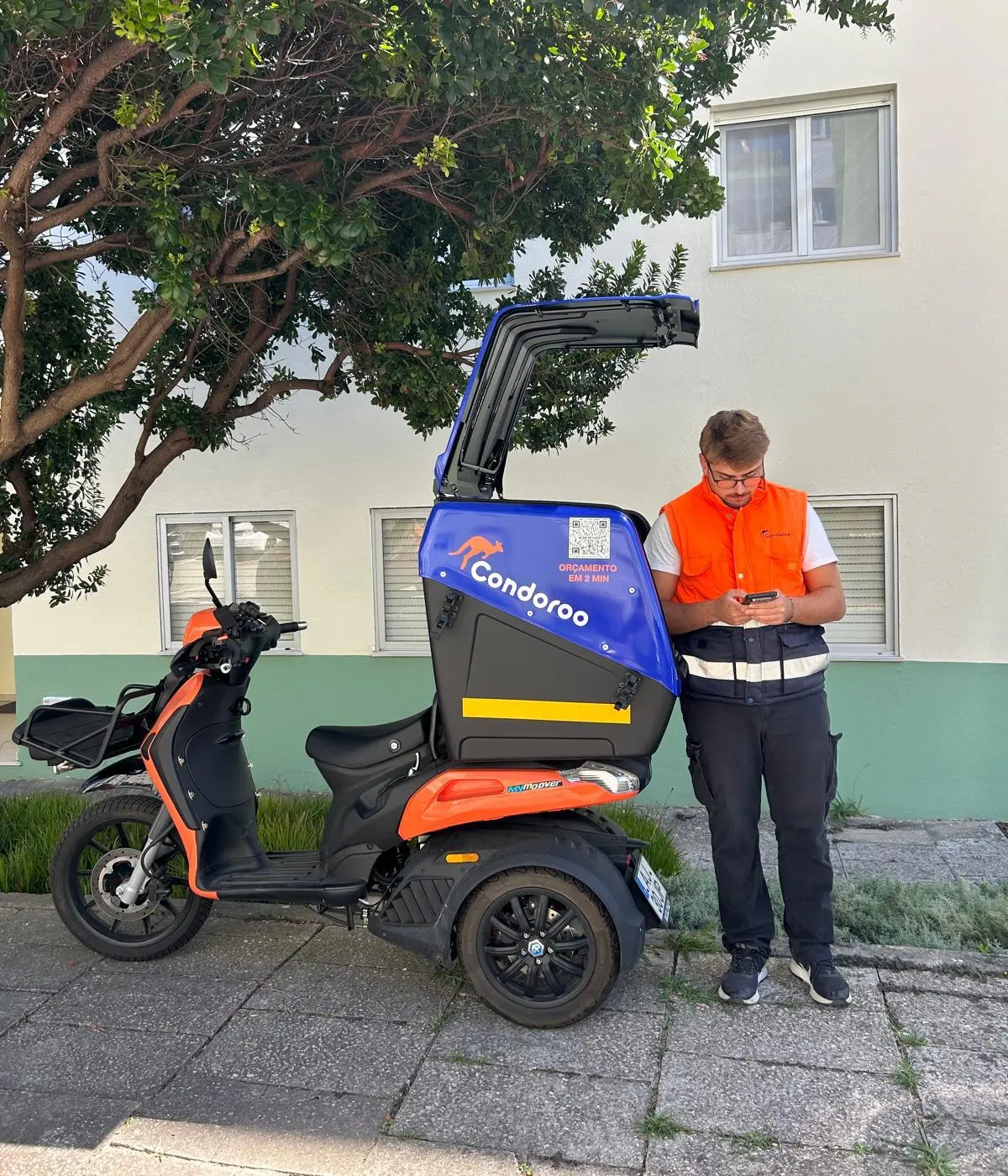
Condoroo provides rental management in Lisbon. To put the home on the market, we handle the rent valuation, the advert, viewings, screening of applicants and the contract, with support for filing it with the AT; you pay one month’s rent only once the home is let. Ongoing management, with rent collection and receipts, starts at €35 a month (prices).
Does an empty unit still pay condominium fees?
A closed-up home still pays condominium fees (quotas). Article 1424 of the Civil Code splits common expenses according to the value of each unit, occupied or not. If the condominium had set the additional contribution for AL, of up to 30% of the fee, that portion no longer has a basis once the AL ends. Ask the administrator to remove it from the next bill and to record this in the minutes. The rules for AL in a building are in Condoroo’s practical guide (in Portuguese), and what is already law in 2026 is covered in our article «Alojamento Local up to 2035: what is a proposal and what is law».
The condominium administrator is often the first to notice that nobody lives there: post piling up, unanswered notices of meeting, a leak that nobody reports. The condominium does not declare homes vacant and does not have to report anyone, but it must cooperate if the câmara asks for information (article 5). Leave the administrator a contact and someone with a key: an undetected water leak affects the neighbours. If you stop paying fees, the debt builds up; see what happens to owners who do not pay (in Portuguese).
Checklist before the home completes a year closed
- ✓Check in the open data of the RNAL (national AL register) whether your registration was cancelled and on what date.
- ✓Decide what to do with the home: let, sell, use it or carry out certified works.
- ✓Keep your water, electricity and internet contracts active and keep the bills.
- ✓Update your tax address and open your post.
- ✓Keep proof of any exception: works certificate, proof of emigration, medical report, court document.
- ✓If you let, register the contract and apply to the câmara for the IMI reduction by 31 December.
- ✓Tell the condominium administrator about the change of use and ask for the AL contribution to be reviewed.
- ✓Keep an eye on the list of vacant properties that the câmara must publish on its website.
Conclusion
IMI on vacant property, in short: losing your AL registration does not raise your IMI straight away. The risk is leaving the home closed for a year in a city where the rate is multiplied by ten. The council already receives consumption data and has a formal request to cross-check it against cancelled AL units, but it has not decided anything yet. The best defence is an occupied home and evidence kept on file. Letting avoids the surcharge and may even lower your IMI.
To see the topic on video: CNN Portugal discussed incentives and penalties for vacant homes on 22 October 2026 (in Portuguese).
IMI on vacant property: frequently asked questions
Does a cancelled AL automatically become a vacant property?
No. Cancellation only removes the exception that protected a unit registered as Alojamento Local. To be vacant, the home must be unoccupied for a year, fall under no other exception in Decree-Law 159/2006, and the câmara must complete the procedure, with a prior hearing, and report it to the Tax Authority.
IMI on vacant property: how much more do you pay in Lisbon?
Because the whole municipality is a zone of urban pressure, article 112-B of the IMI Code applies: the rate becomes ten times the normal rate, rises 20% in each following year and is capped at 20 times. With a VPT of €150,000 and a rate of 0.3%, IMI of €450 becomes €4,500 in the first year, €5,400 in the second and, at the cap, €9,000.
How does the câmara know the home is empty, and how can I challenge it?
Water, electricity, gas and telecoms companies send municipalities, by 1 October each year, the list of units with no contracts or low consumption (up to 7 m³ of water and 35 kWh of electricity a year). Before deciding, the câmara notifies the owner at their tax address and opens a prior hearing, where you can file contracts, bills and proof of exceptions.
Which exceptions stop a home being declared vacant?
Among others: rehabilitation works certified by the câmara, construction or a use licence less than a year old, the residence in Portugal of a Portuguese emigrant, an active AL registration or tourist development, and proven objective impediments such as a court dispute over possession, health, training or being an informal carer.
If I let the home now, do I avoid the surcharge and get the IMI reduction?
Letting it as a residence, with a contract registered with the tax office, means the home is no longer unoccupied and is the best evidence at the prior hearing. In Lisbon you can also apply for the IMI reduction of up to 20% for let homes, with rent up to €1,500, by 31 December 2026. The law does not say how the câmara treats a contract signed a few weeks before the end of the year, so let as soon as possible.
By when must the câmara report a vacant home to the tax office?
By 31 December, the same deadline as for reporting IMI rates (article 112(14) and (16) of the IMI Code). The câmara must also publish the list on its website.
Does an empty unit still pay condominium fees?
Yes. Fees are split according to the value of each unit, occupied or not. What may fall away is the additional contribution of up to 30% set for Alojamento Local, because there is no longer an AL.
This article is for information only and does not replace legal or tax advice.