 on Google


A blown bulb on the stairs, a garage door that will not close, a blocked gutter: small problems that, left unanswered, turn into large expenses. A preventive maintenance contract is a way of organising this work regularly and at a predictable cost. In this guide we explain what a maintenance retainer is, which maintenance the law already requires of the building, what the contract should contain, how to compare proposals and how the general meeting decides.
In short
- ✓A retainer is a contract with a fixed periodic fee for a defined set of services.
- ✓The law requires maintenance works at least once every eight years and the upkeep of fire safety conditions in the common parts.
- ✓The contract should state what it includes, how often and what is paid separately.
- ✓The contract goes into the annual budget approved by the general meeting.
- ✓The common reserve fund remains mandatory for maintenance works.
What a maintenance retainer is
A retainer is a contract with a fixed periodic fee, usually monthly, for a defined set of services. In condominium maintenance, this can include inspections of the common parts, small repairs, checks on lighting, doors and locks, clearing gutters and overseeing suppliers. The advantage is predictability: the condominium knows how much it will pay and does not need to ask for a quote for every small fault.
A retainer does not replace the mandatory maintenance contracts held with specialist companies, such as the lift contract, nor larger maintenance works. It works alongside them.
What the law already requires of the building
Some maintenance is not optional. The first is regular upkeep of the building:
«1 – As edificações devem ser objeto de obras de conservação pelo menos uma vez em cada período de oito anos, devendo o proprietário, independentemente desse prazo, realizar todas as obras necessárias à manutenção da sua segurança, salubridade e arranjo estético.» — Legal Regime for Urbanisation and Building (RJUE), article 89(1)
In plain English: buildings must undergo maintenance works at least once every eight years, and the owner must, regardless of that period, carry out all works needed to keep them safe, sanitary and in good aesthetic condition.
The second is fire safety. Decree-Law 220/2008 states that, under horizontal property, maintaining fire safety conditions in the common parts is the condominium’s responsibility (art. 6(3), text of the article). This includes, for example, fire extinguishers, emergency lighting and signage, where they exist. Lifts must be maintained by a lift maintenance company and undergo periodic inspections, under the rules of the DGEG. See our guide to lifts in condominiums.
| Area | Usual frequency | Done by | In the retainer? |
|---|---|---|---|
| Inspection of the common parts | Periodic, as per the contract | Maintenance technician | Yes |
| Lighting, doors and locks | Whenever needed | Maintenance technician | Usually yes |
| Gutters and drainage | Before autumn and after storms | Technician or specialist company | May be included |
| Extinguishers and emergency lighting | As per fire safety rules | Specialist company | Separate contract |
| Lift | Mandatory maintenance contract | Lift maintenance company | Separate contract |
| Roof and façade | Maintenance works, at least every 8 years | Building contractor | No, separate works |

Why planning pays off
A leak spotted during an inspection can be solved with a small repair. The same leak, ignored for two winters, may require works on the roof, on the ceiling of a flat and an insurance claim. Preventive maintenance reduces urgent repairs, which are harder to budget for and to approve. It also protects the value of the units: a buyer notices the condition of the stairs, the façade and the lift.
What the contract should contain
- The list of services included, with specific examples.
- How often inspections take place and the report delivered after each one.
- The response time for faults and emergencies.
- What is paid separately: materials, parts, out-of-hours call-outs, specialist work.
- The price, how it is updated and the length of the contract.
- The rules for giving notice and ending the contract.
- The provider’s civil liability insurance.
Ask for proposals with the same scope so you can compare them. A cheap retainer that excludes call-outs and materials may end up costing more than a complete proposal.
How the general meeting decides
The cost of the contract goes into the annual budget, which the administrator prepares and the general meeting approves (art. 1436(1)(b) and art. 1431 of the Civil Code). Maintenance costs for the common parts are paid by the owners in proportion to the permillage, unless another rule applies (art. 1424). Larger works that come up during inspections are approved separately and, if they are extraordinary maintenance works, with at least three quotes (art. 1436(2)). The common reserve fund, of at least 10% of each owner’s share of the other expenses, remains mandatory (art. 4 of Decree-Law 268/94). See the types of works in condominiums.
Signs that the building needs a plan
- The same faults recur several times a year, such as the entrance door or the garage lighting.
- Every small repair requires a request for a quote and weeks of waiting.
- There is no record of the work done or of the dates of the latest inspections.
- Repair costs vary widely from year to year and lead to extra contributions.
- There are damp patches, cracks or blocked gutters that nobody is monitoring.
If the building shows two or more of these signs, it is worth taking a proposal for regular maintenance to the general meeting, with a clearly defined scope, price and inspection frequency.
Before winter
Autumn is the time to check roofs, gutters and downpipes, before the first heavy rain. A contract with an inspection at that time of year prevents blockages and leaks. See the preventive maintenance steps for autumn and how we handle construction management.
How Condoroo helps
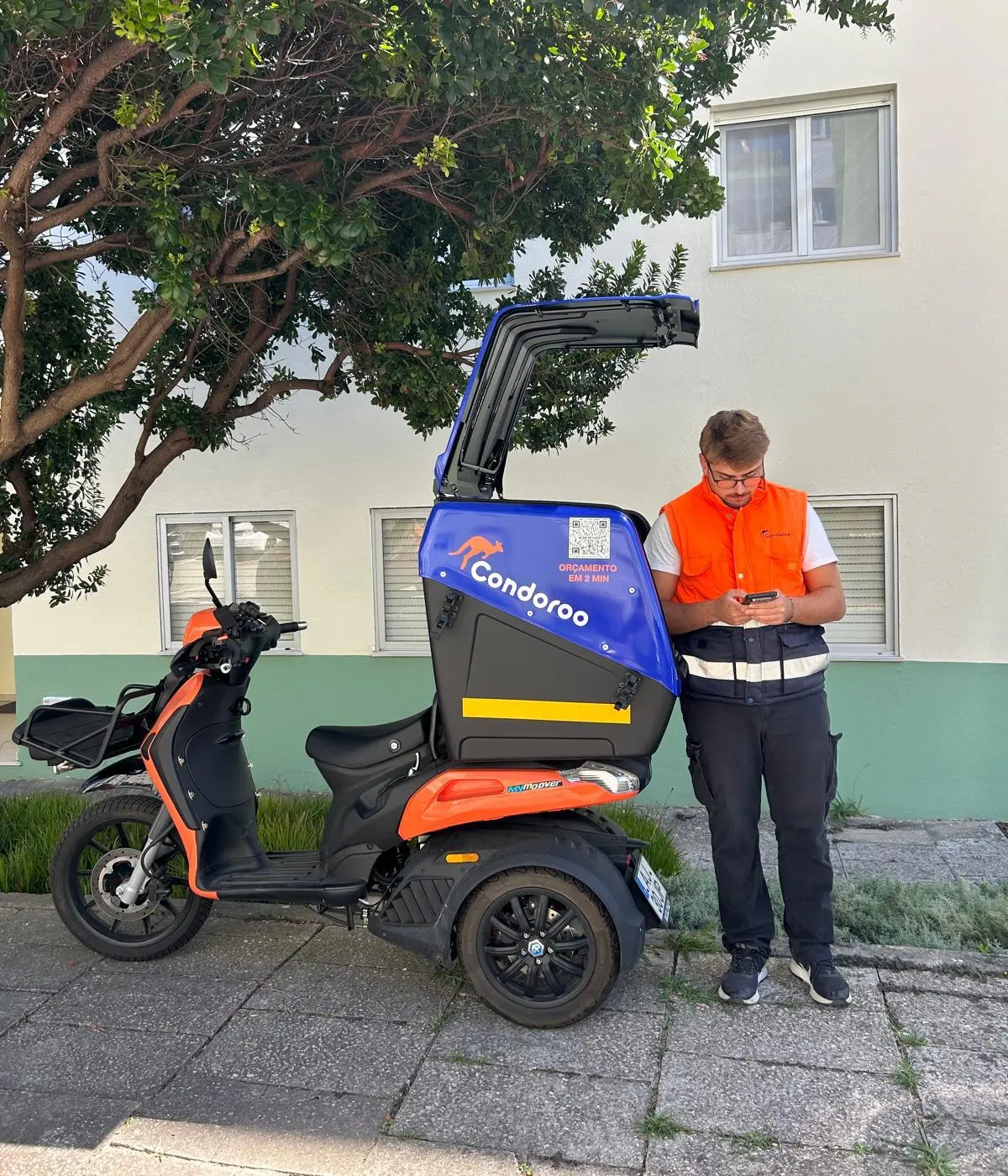
Condoroo manages more than 600 condominiums, with a team of more than 20 professionals. Every day we carry out more than 35 inspections, around 700 a month, organised by a route algorithm and carried out by motorbike. Where available, the RepairMax add-on uses technicians on motorbikes equipped as mobile workshops to carry out small repairs with labour included; the condominium pays only for materials, according to the plans page. Larger works are always taken to the general meeting with comparable quotes. Management plans start from €6.50 per unit per month.
Preventive maintenance contract: frequently asked questions
What is a preventive maintenance contract?
It is a contract with a fixed periodic fee for a defined set of maintenance services for the common parts, such as inspections and small repairs.
Does the contract replace the lift contract?
No. The lift must be maintained by a lift maintenance company, with its own contract and periodic inspections.
Is building maintenance mandatory?
Yes. Buildings must undergo maintenance works at least once every eight years (art. 89 of the RJUE), and the condominium is responsible for fire safety in the common parts (art. 6 of Decree-Law 220/2008).
Who approves the contract?
The general meeting, when it approves the annual budget prepared by the administrator.
Are materials included?
It depends on the contract. Always check what is paid separately: materials, parts and specialist work.
Do I still need a reserve fund with a maintenance contract?
Yes. The common reserve fund is mandatory and is used to pay for maintenance works on the building.
This article is for information only. Legislation and websites checked on 26 October 2026.