
 on Google


The first heavy rains of autumn reveal what the summer hid. Leaves, nests and rubbish that built up over the summer block gutters and drains, water overflows down the façade and seeps into the top floor. A broken tile becomes a stain on a neighbour’s ceiling. Preventive roof maintenance before winter is one of the cheapest and most rewarding jobs in a condominium. In this guide we bring together seven steps to prepare roofs, gutters and drainage, and explain who decides, who pays and what to do if there is damage anyway.
In short
- ✓The roof and roof terraces are common parts, even if they serve only one unit.
- ✓Gutters, downpipes and drains should be cleaned before the rains and after storms.
- ✓Work at height should be done by companies with equipment and insurance.
- ✓As a rule, the cost is shared by permillage.
- ✓Essential and urgent repairs can be carried out by any owner if the administrator is absent.
The roof belongs to everyone
The law leaves no doubt about the roof:
«b) O telhado ou os terraços de cobertura, ainda que destinados ao uso de qualquer fracção;» — Civil Code, article 1421(1)(b)
In plain English: the roof and roof terraces are common parts, even if they are for the use of a single unit.
The building’s general water installations, such as downpipes and collectors, are also common parts (article 1421(1)(d)). Maintenance is decided at the general meeting and paid for by everyone in proportion to their permillage, unless the constituting deed sets a different rule (article 1424). Buildings must have maintenance works at least once every eight years (article 89 of the RJUE).
| Step | What to do | When |
|---|---|---|
| 1. Inspection | Check tiles, flashings, chimneys and waterproofing | September or early October |
| 2. Gutters | Remove leaves and rubbish, check fixings and joints | Before the first rains |
| 3. Downpipes | Test the flow and unblock | Together with the gutters |
| 4. Drains and terraces | Clean drains, check falls and membranes | Before the rains |
| 5. Repairs | Replace tiles, redo joints, fix flashings | Straight after the inspection |
| 6. Records | Photos, report and invoices filed | When the work is finished |
| 7. Winter plan | Emergency contacts and post-storm inspection | Before November |

Step 1: inspect the roof
Start with a visual inspection by someone who knows what to look for: broken or slipped tiles, loose flashings, open joints around chimneys, waterproofing membranes with bubbles or cracks on terraces. Ask for a report with photos. That is what lets you ask for comparable quotes.
Owners can help too. Ask top-floor residents to tell the management if they see damp patches, peeling paint or mould on ceilings, especially near outside walls. On the stairs, look for stains on the ceiling of the top landing and around skylights. These are signs that water is already getting in and that the repair should not wait for the next general meeting.
Step 2: clean the gutters
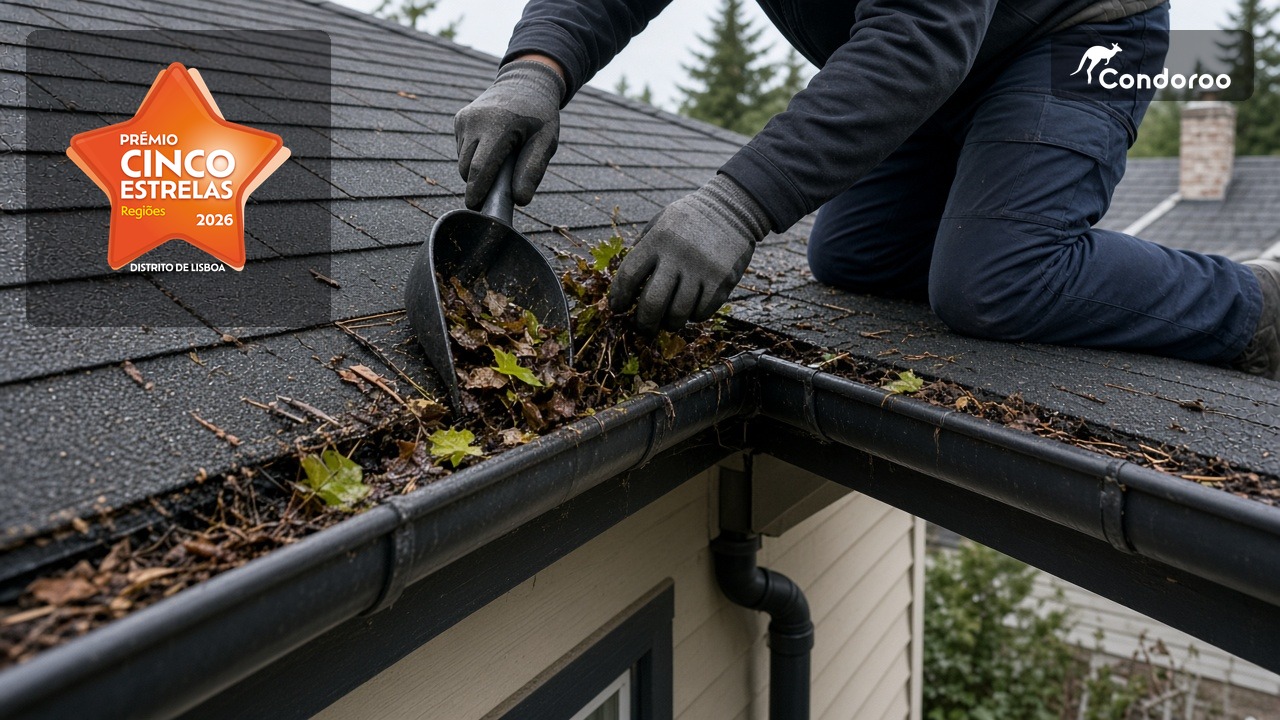
A gutter full of leaves overflows and sends water down the façade. Remove the debris, check the fixings and joints, and make sure water runs to the downpipes. In buildings with trees nearby, cleaning may be needed more than once a year.
Step 3: test the downpipes
Pour water into the gutter and check that it flows freely out at the bottom. A blocked pipe can burst under the weight of water or leak into the wall. Also check the inspection chambers and collectors on the ground floor.
Step 4: drains and terraces
On roof terraces, blocked drains cause puddles that eventually get through the waterproofing. Clean the drains and check that the terrace drains towards them. If there are signs of leaks on the floor below, ask for the membrane to be assessed.
Step 5: carry out repairs in time
Small repairs should be done straight after the inspection, before the rains. Larger works, such as replacing the roof, are extraordinary maintenance: they need at least three quotes (article 1436(2)) and approval at the general meeting. Work at height should be done by companies with protective equipment and professional liability insurance. If you need scaffolding on the public highway, you need a permit from the municipality. See, for example, our guide to roofing companies in Porto.
Step 6: record everything
Keep before-and-after photos, the report, the invoices and the guarantees. If there is a claim, these documents prove that the condominium carried out the maintenance. The insurer must be notified within the deadline set in the policy or, failing that, within eight days of becoming aware of the loss (article 100 of the insurance contract regime). See our guide to multi-risk condominium insurance.
Step 7: prepare for winter
Keep the contacts of an emergency service to hand and arrange an inspection after each heavy storm. Follow the warnings from IPMA, the Portuguese weather service, and the recommendations of Civil Protection. If urgent damage occurs and the administrator cannot act, the law allows any owner to step in:
«1 – As reparações indispensáveis e urgentes nas partes comuns do edifício podem ser levadas a efeito, na falta ou impedimento do administrador, por iniciativa de qualquer condómino.» — Civil Code, article 1427(1)
In plain English: essential and urgent repairs to the common parts can be carried out on the initiative of any owner if the administrator is absent or unable to act.
Reserve fund and budget
Annual gutter cleaning and roof inspection should be in the ordinary budget. Larger works can be paid for from the common reserve fund, which exists to cover maintenance works (article 4 of Decree-Law 268/94). A preventive maintenance plan helps spread the costs over the years. See also the types of works in condominiums.
How Condoroo helps
Condoroo manages more than 600 condominiums. Before winter, we plan roof inspections and gutter cleaning, ask for comparable quotes for repairs and follow up the work. Our team carries out more than 35 inspection visits a day, around 700 a month. Where available, the RepairMax add-on handles small repairs with labour included; the condominium pays for materials, according to the plans page. After storms, we follow up insurance claims.
Roof maintenance in autumn: frequently asked questions
Is the roof a common part even on the top floor?
Yes. The roof and roof terraces are common parts, even if they are for the use of one unit (article 1421(1)(b) of the Civil Code).
When should I clean the gutters?
Before the first autumn rains and after storms. In buildings with trees nearby, more than one cleaning a year may be needed.
Who pays for roof repairs?
All the owners, as a rule in proportion to their permillage, unless the constituting deed sets a different rule (article 1424).
Do I need three quotes to clean gutters?
Not for routine maintenance. Three quotes are compulsory for extraordinary maintenance works or innovations (article 1436(2)).
What do I do if rain comes into my home because of the roof?
Tell the management straight away, photograph the damage and notify the insurer. If the administrator cannot act, any owner can carry out essential and urgent repairs (article 1427).
Does insurance cover leaks through the roof?
It depends on the policy. The compulsory insurance only covers fire; water damage depends on a multi-risk policy with that cover.
This article is for information only. Legislation and websites checked on 26 October 2026.